
contact@haitiwonderland.com+509 36184317

Discover

Shopping Cart

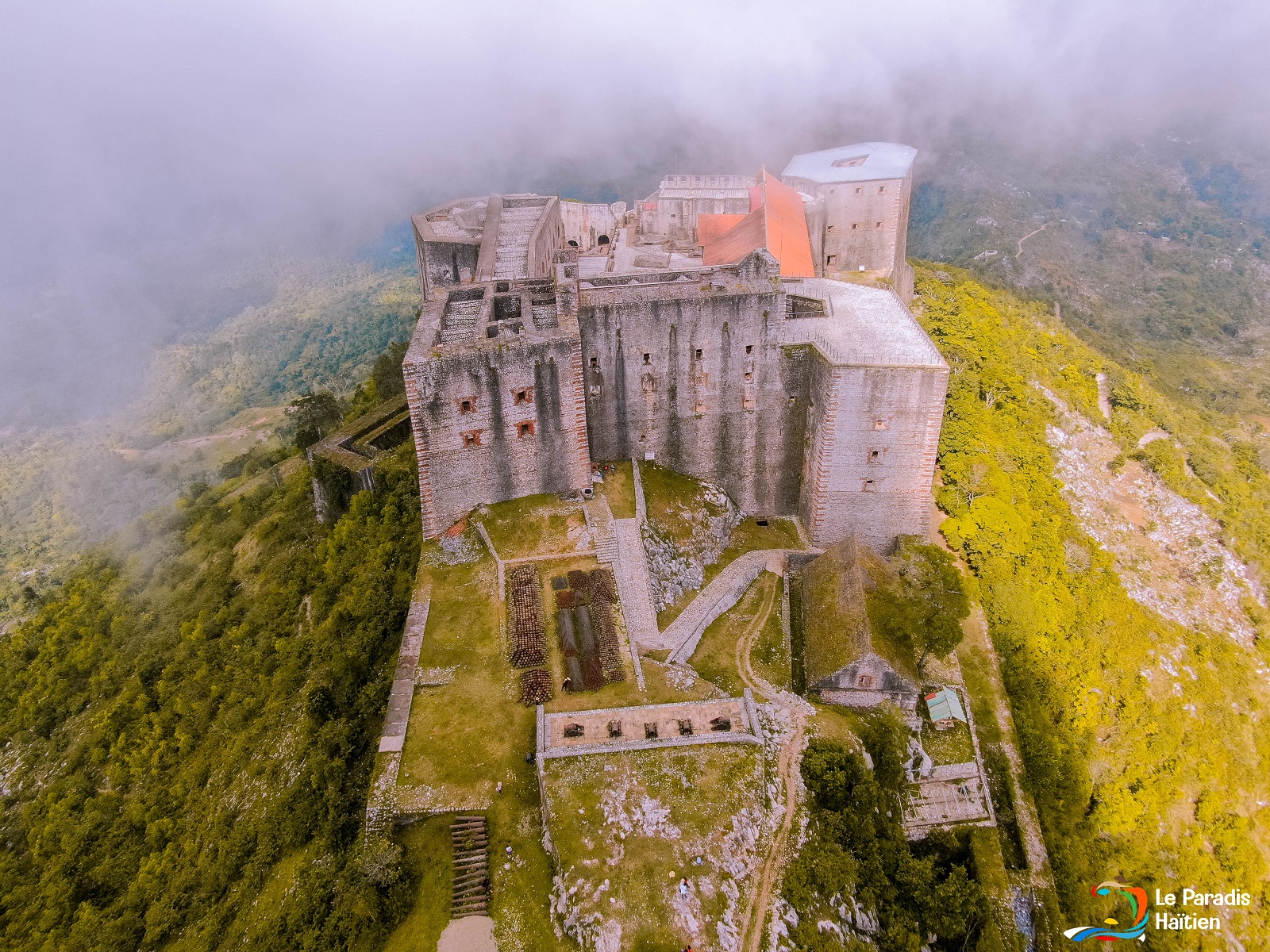
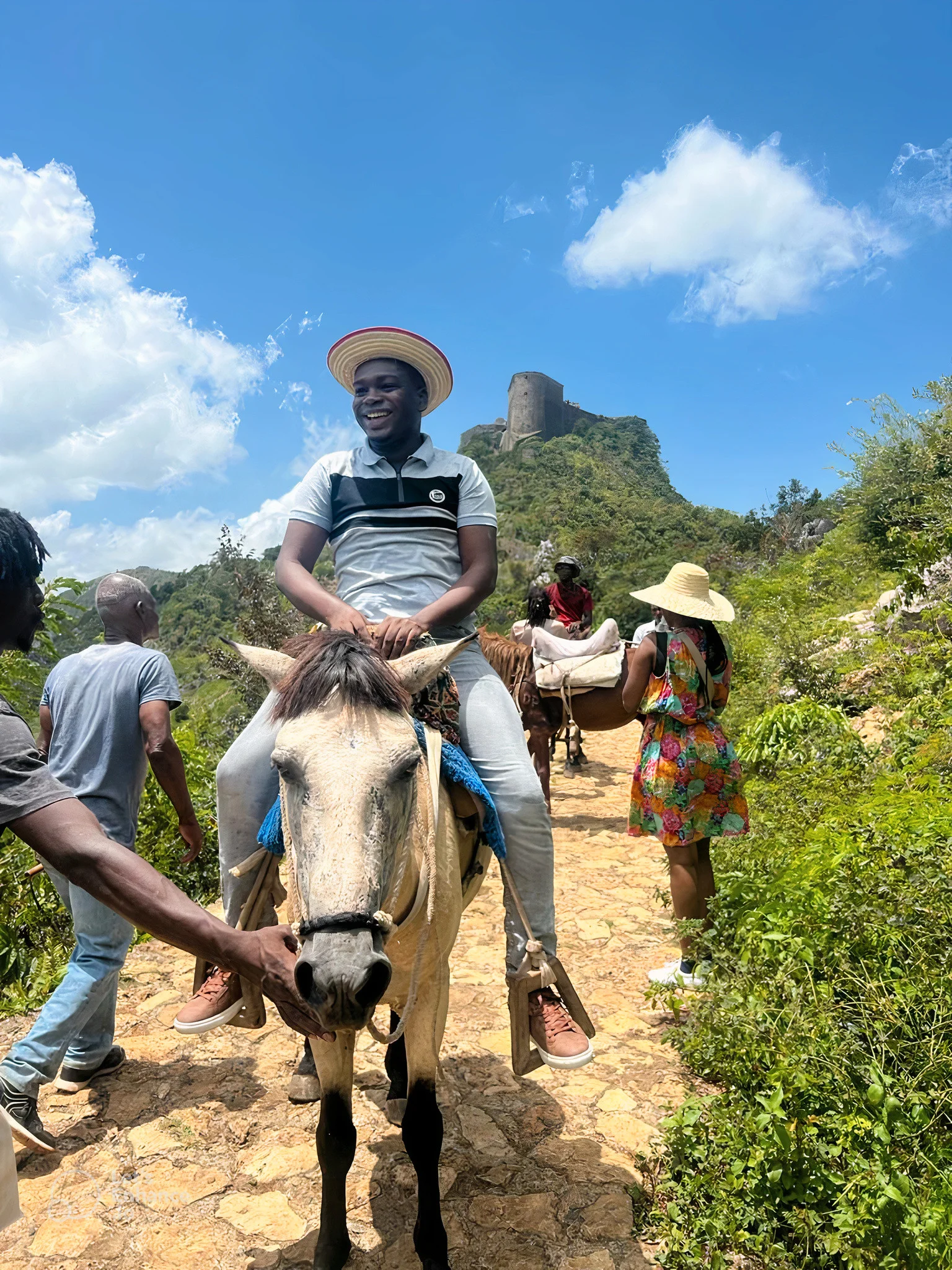
Haïti : Citadelle la FerrièreHaïti : Citadelle la Ferrière
Culture November 01, 2024

Guédés: When Haïti celebrates its ancestors with color and fervor

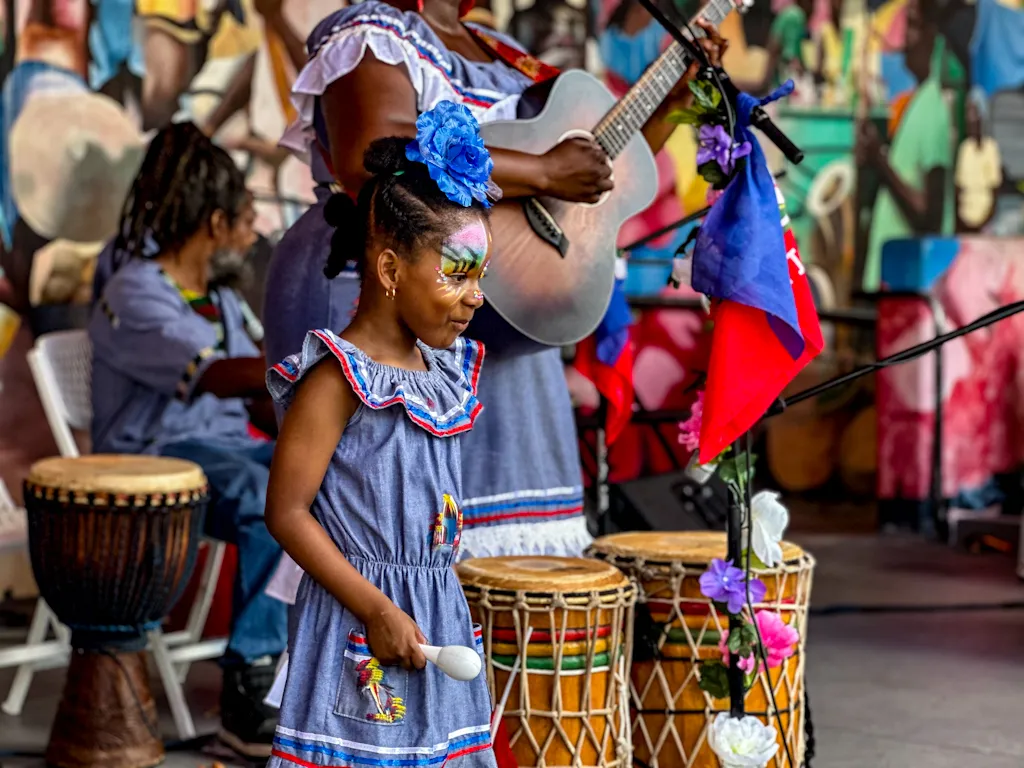
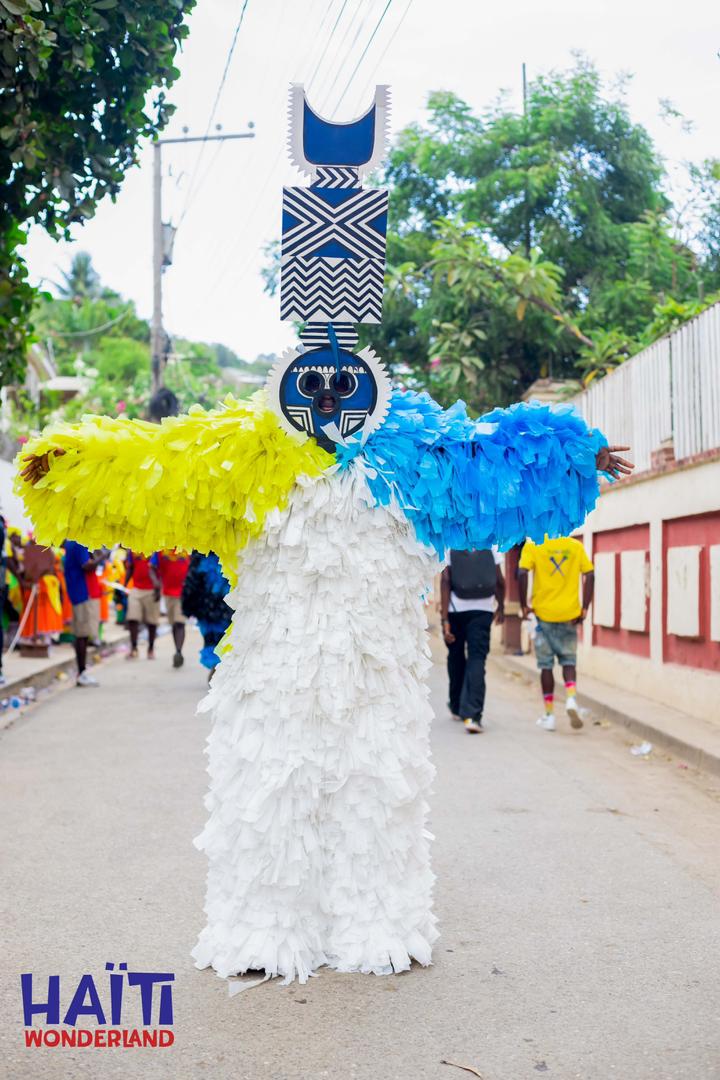
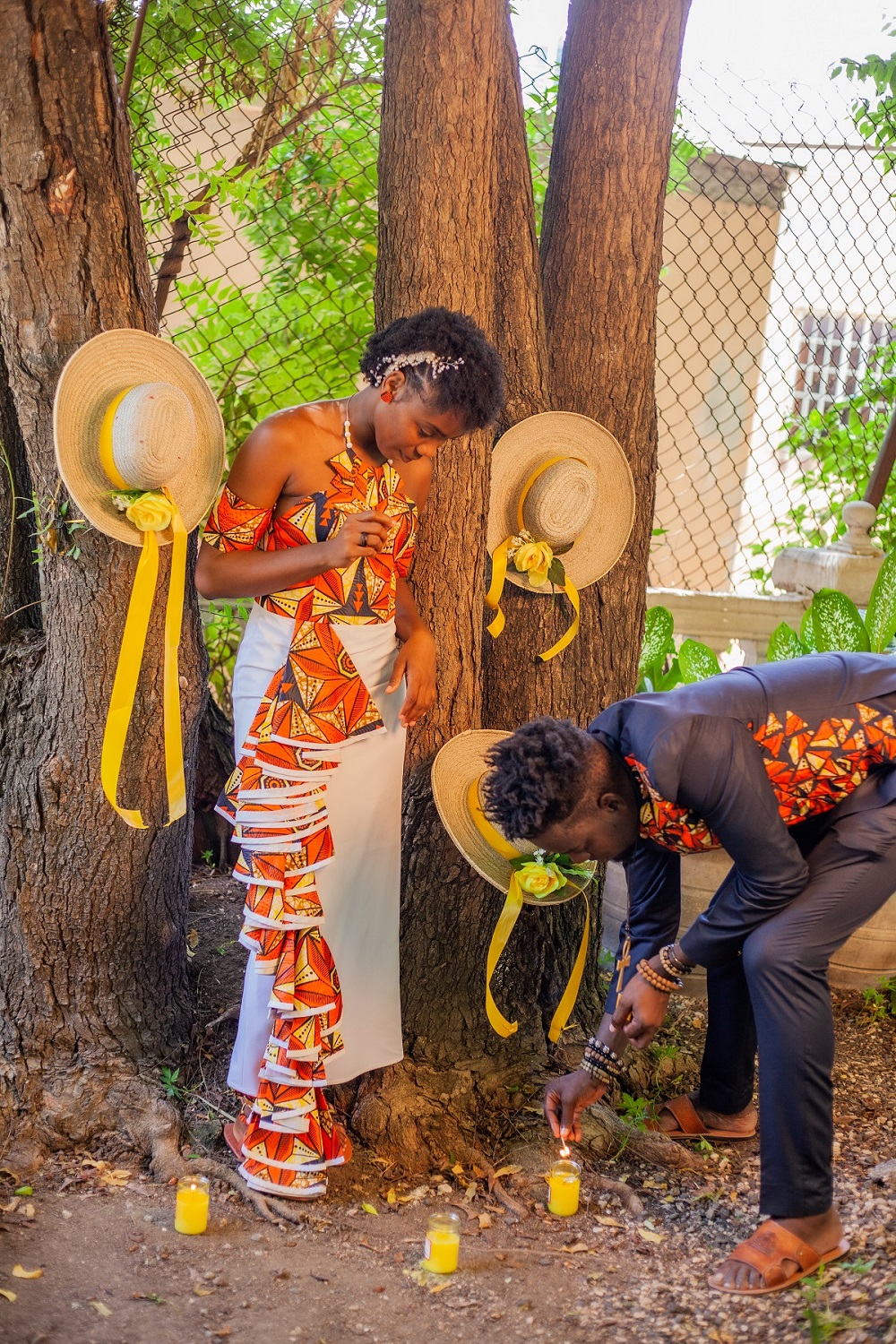
Every November 1st and 2nd, Haïti comes alive with the colors black and purple to celebrate the Guédés, spirits venerated in the voodoo religion, symbols of a powerful bond between the living and the dead. Fascinating, indomitable and provocative, the Guédés form a true family in the pantheon of Haitian voodoo, where they are respected for their role as spiritual guides of the deceased to the afterlife. Led by iconic figures such as the legendary Baron Samedi and his companion Grann Brigitte, the Guédés embody the paradoxes of life and death. Each Baron has a unique personality: Baron Cimetière, Baron Kriminel, and Baron La Croix are the guardians of the souls that wander on the borders of the world of the dead. Together, they form a powerful and somewhat frightening presence, but one that is deeply rooted in Haitian culture. The Guédés are not like other voodoo spirits; they demonstrate their fearlessness in a spectacular way. Accustomed to death, they are fearless and are provocative: they eat glass, raw peppers, and coat their sensitive parts with rum and pepper. These gestures mark their indifference to danger and remind us that they have already known earthly life. They are thus psychopomps – these beings who lead the souls of the dead – and act as bridges between the world of the living and that of the dead. Some Guédés, like Guédé Nibo, wear black, purple, and white clothing, each with unique characteristics. They are many and varied: Guédé Fouillé, Guédé Loraj, Papa Guédé, and many others. These are the spirits who, each year, remind Haitians of the importance of remembering and honoring the deceased. The cult of the Guédés is not only religious; it is also cultural and historical. According to tradition, their spiritual territory, or “Fètomè” – nicknamed the “Country without Hats” – is a place where the souls of ancestors reside. According to stories, the origins of this cult go back to the Abomey plateau, the ancient capital of the kingdom of Dahomey, in Africa, where death and life coexist in a form of symbiosis. This celebration in Haïti even finds echoes in ancient history. The Romans also honored their dead with the “Fête des Lémuria”, which took place in February, to ward off spirits and restore peace between the world of the living and that of the deceased. For Haitians, honoring the Guédés is about accepting death as a part of life and celebrating the invisible bonds that unite us with those who have left us. It is also a way of resisting, because life, despite its challenges, must be celebrated in all its complexity and depth.

Par Faïly Anderson Trazil | 1
Learn more
Culture February 17, 2024

Haiti: Carnival and Rara: Crossed Perspectives on Culture and Haitian Identity

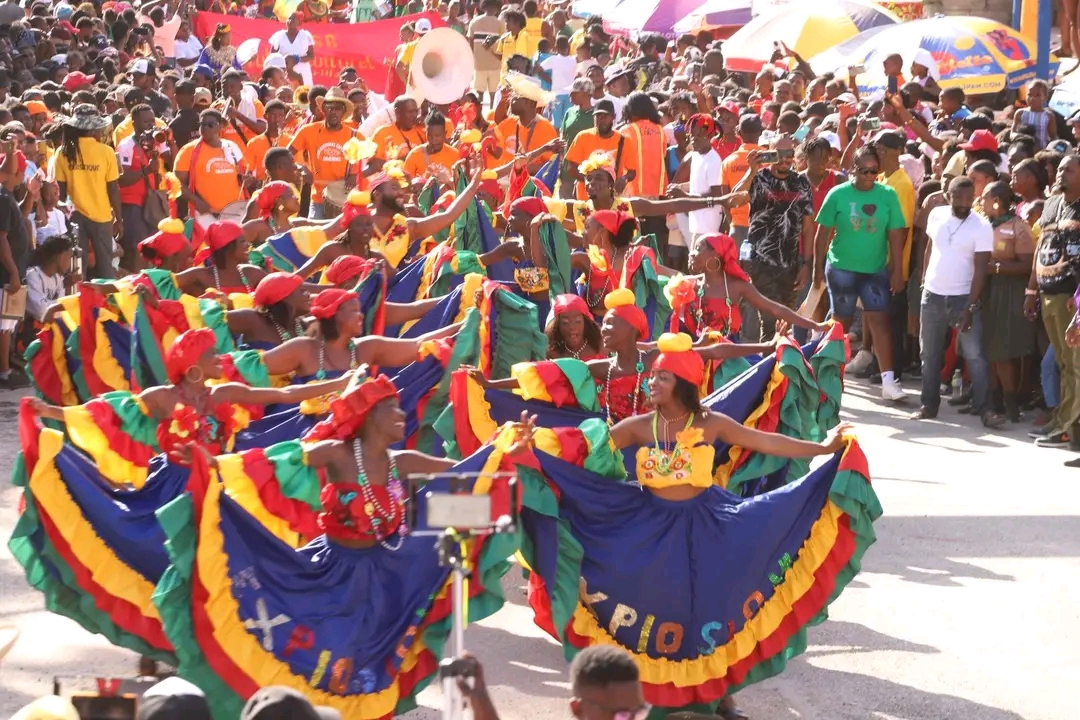
In our tradition, carnival represents an essential cultural activity. Indeed, for the holding of it this year, the State had drawn from the public treasury not only a huge sum but also a strong concentration of law enforcement to ensure the protection and security of carnival-goers in the area. metropolitan. Despite numerous criticisms and concerns expressed by certain media on the one hand, then on the other hand by the democratic opposition. While it is true that in Port au Prince these concerns had had a no less valuable consequence on the progress of this festivity. It is no less true that this was the case in other provincial towns, as proof in the southeast department the authorities did not record anything as an element of accident or incident during the progress of the carnival unlike Port au Prince. Certainly, socio/economic problems are increasingly worrying, nevertheless what makes us what we are today, a free and independent people is none other than our exceptionality. This deeply expresses our intrinsic characteristic in relation to people. In fact, historically we are a people who laugh and cry, smile and irritate, dance and hit the system, sing and fight so well that "grenadya alaso sa ki mouri zafè ya yo" is the most emblematic song of the slaves for the conquest of our freedom. We do not intend to claim that those who expressed their disagreement with the carnival are showing a historical deficit. However, we leave in the shadows a fundamental question: why is carnival taken care of by the State while the rara is like an abandoned child? The rara is not only a simple cultural tradition but, above all, it is the heritage of our valiant warriors who bravely fought the French expeditionary army, the most powerful of the time. While, this mass cultural, she is still marginalized by state authorities. It is emphasized that social cohesion is the dead point of carnival. On the other hand, this is the strong point of rara. As proof, the Thursday of the Dead in our Voudouesque tradition which represents the opening ceremony for the rara bands is the blatant testimony of this social cohesion. And, in fact, there were circles of people who took divergent directions to attend the opening ceremony of their rara bands. For this opening ceremony the atmosphere was a taste of carnival in terms of color. On the side of Croix Hilaire, for the title champion Ratyèfè full force band, the color of his club was very diverse, a long dress of apricot yellow, mauve white, then white scarf. In terms of performance, this band had completely proven its champion skills thanks to its arsenal of musicians who were not in their testing phase. To tell the truth, they performed their note with surgical precision as a doctor-surgeon in his surgical procedure. The synchronization between the musicians, the instruments and then the fans form a whole and harmonize perfectly well. This band not only has the magic of words and verbs, it seems that they also have the magic to thrill even the most reluctant fans. Moreover, his performance for this dead Thursday was a challenge for his rivals this weekend to the extent that their performances were less good. On the symbol side of light, Grap Kenèp was the wonder of the Thursday evening of the dead. His club dressed in the appropriate color for this evening, purple scarf, purple jersey, then white “kolan”. In a symbolic way, this marriage of color represents Baron in Haitian Vodou. Without a doubt, it was the most beautiful symbolic representation of the evening. In terms of performance, returning from the cemetery we felt a very strong warmth of jubilation, elation, and playfulness for a completely balanced performance. As far as Chenn Tamarin is concerned, it was already 2 a.m. when our team met him, it was a less good performance than what we were accustomed to. On the symbolic side it leaves something to be desired. His news was that he had his own media. Petit-Goave/Culture and Society
Par Gladimyr Vaval |
Learn more

Recently Posted

Haïti Music: Haitian artist Rutshelle Guillaume crowned “Best Caribbean Artist” at the Trace Awards & Festival 2023

The international music scene buzzed with excitement on Saturday, October 20, 2023 when talented Haitian singer Rutshelle Guillaume was crowned “Best Caribbean Artist” at the prestigious Trace Awards & Festival 2023, held in Kigali, Rwanda. This award recognizes a remarkable career and a significant contribution to the evolution of Caribbean music. Rutshelle Guillaume is an artist who has captured the hearts of music lovers thanks to her undeniable talent and her numerous quality productions. The Trace Awards & Festival is an event renowned for its promotion of Afrocentric music and culture. It is a platform that celebrates the musical diversity of the Caribbean while highlighting the creativity of the region. Caribbean artists are honored for their exceptional contribution to the enrichment of world music. Rutshelle Guillaume’s victory at this prestigious event is not only a tribute to her talent, but also a recognition of the richness of Caribbean music and its ability to transcend geographical boundaries. The Haitian singer knew how to embody this musical diversity and touched the hearts of many listeners around the world. Her career, marked by memorable titles and collaborations with other talented artists, has made her an ambassador for Caribbean music on an international scale. His commitment to promoting Haitian and Caribbean culture has helped strengthen ties between artists in the region and the rest of the world. Rutshelle Guillaume continues to inspire many emerging artists and show that passion, talent and dedication can lead to extraordinary achievements. His victory at the Trace Awards & Festival 2023 is a well-deserved tribute to his influence and undeniable contribution to Caribbean music. Ultimately, Rutshelle Guillaume’s recognition as "Best Caribbean Artist" at the Trace Awards & Festival 2023 is a reminder of the power of music to unite cultures and celebrate artistic diversity. It is a historic moment for the Haitian artist and a source of pride for the Caribbean as a whole. Rutshelle Guillaume continues to be an inspiration to many artists and music lovers around the world, and her music will live on as a testament to her incredible talent and dedication to her art.


Belle-Anse, a village between tradition, nature and tourist potential

Nestled in the southeast of Haiti, Belle-Anse is a destination that fascinates with its natural beauty and rich history. This small town, still often ignored by major tourist routes, is full of treasures that deserve to be discovered. Its wild beaches, its imposing mountains and its unique historical heritage make Belle-Anse a hidden pearl, ready to seduce travelers in search of authenticity and tranquility. Belle-Anse, founded in the 18th century, still bears the traces of its past. Its history, marked by changes of names and identity, bears witness to the political and social upheavals that have given the region. From the colonial era to the birth of the Republic, each corner of the city tells a part of the history of Haiti. This rich past is combined with a vibrant cultural life, where local festivals, such as the celebration of the Patron Saint every December 10, offer an authentic glimpse into the lives of the inhabitants. The historical remains scattered throughout the city are not only a reminder of the era of colonization, but also of the struggles for independence. These witnesses of the past, combined with a calm and preserved atmosphere, make Belle-Anse a place where history and nature intertwine harmoniously. What distinguishes Belle-Anse is undoubtedly its spectacular natural environment. Ultimately, these beaches before the deserts invite you to relax. Lagan Beach, lined with palm trees and crystal clear waters, offers an idyllic setting for lovers of wild nature, far from the crowds of more frequent tourist destinations. The nearby Bay of Jacmel is a true natural bliss, promising moments of calm and escape. The city is also surrounded by majestic mountains, ideal for those who wish to explore the Haitian landscapes on foot, while discovering a unique biodiversity. While Belle-Anse’s natural resources are rich, they are also fragile, and preserving these areas remains an important issue for the future of the region.

Recently Posted

History

History

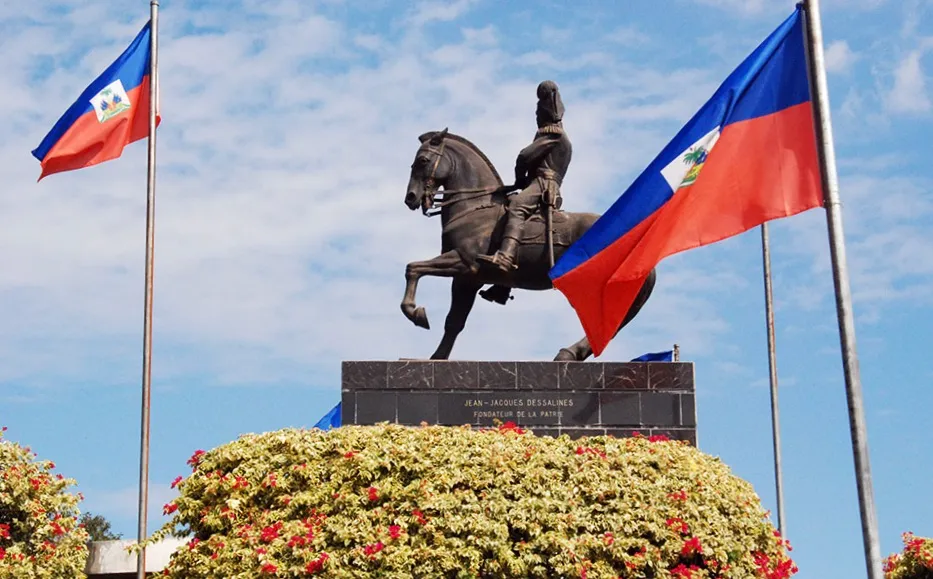
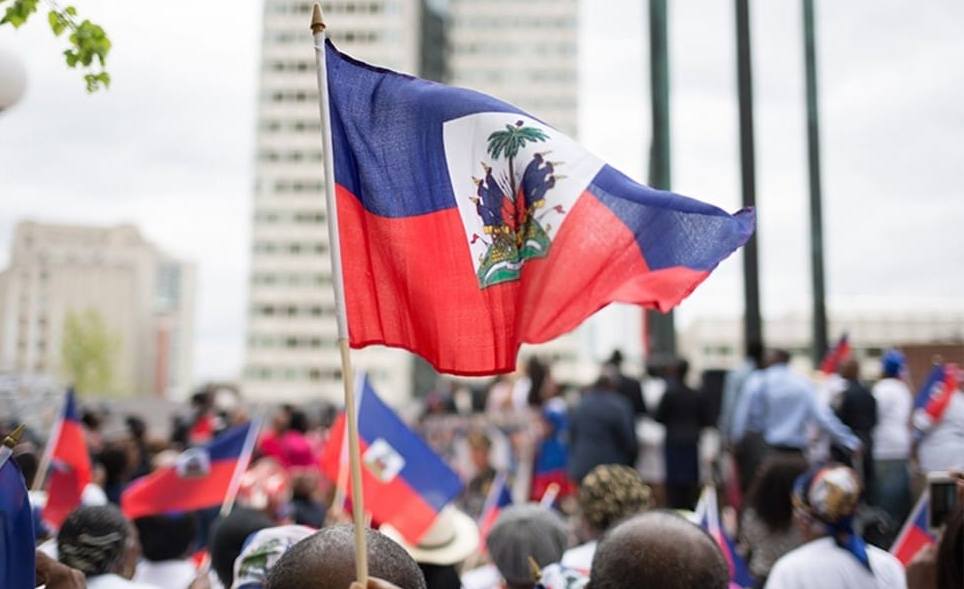
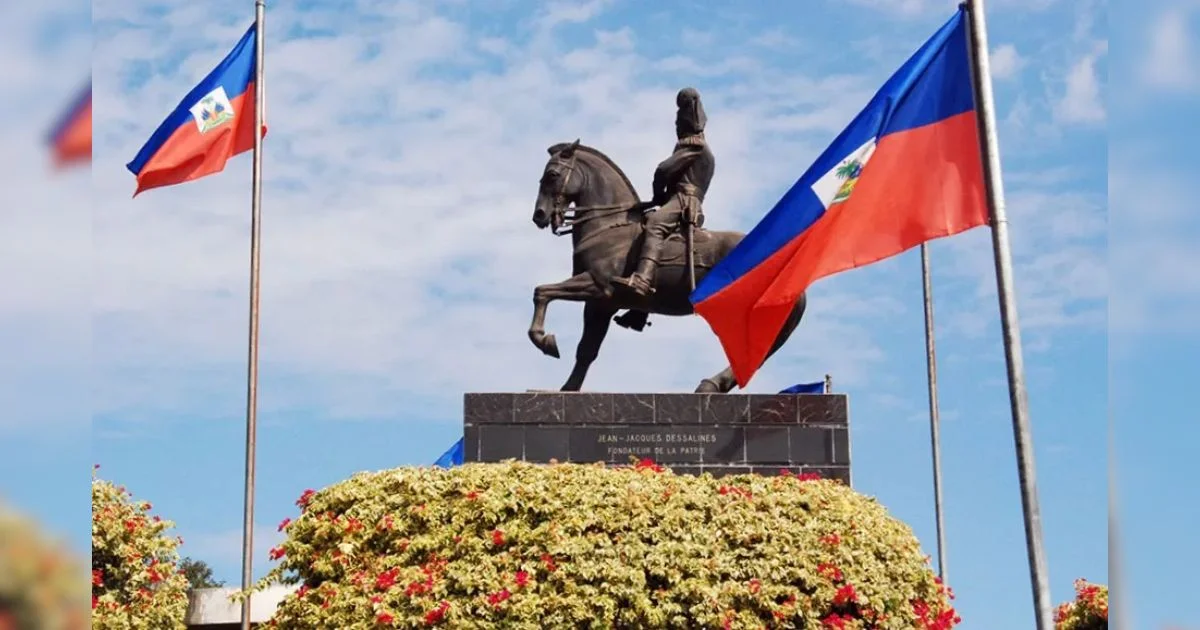
First black nation to free itself from slavery and gain independence from France in 1804 and influenced other liberation movements around the world, inspiring struggles for freedom and equality.

Natural beauty

Natural beauty

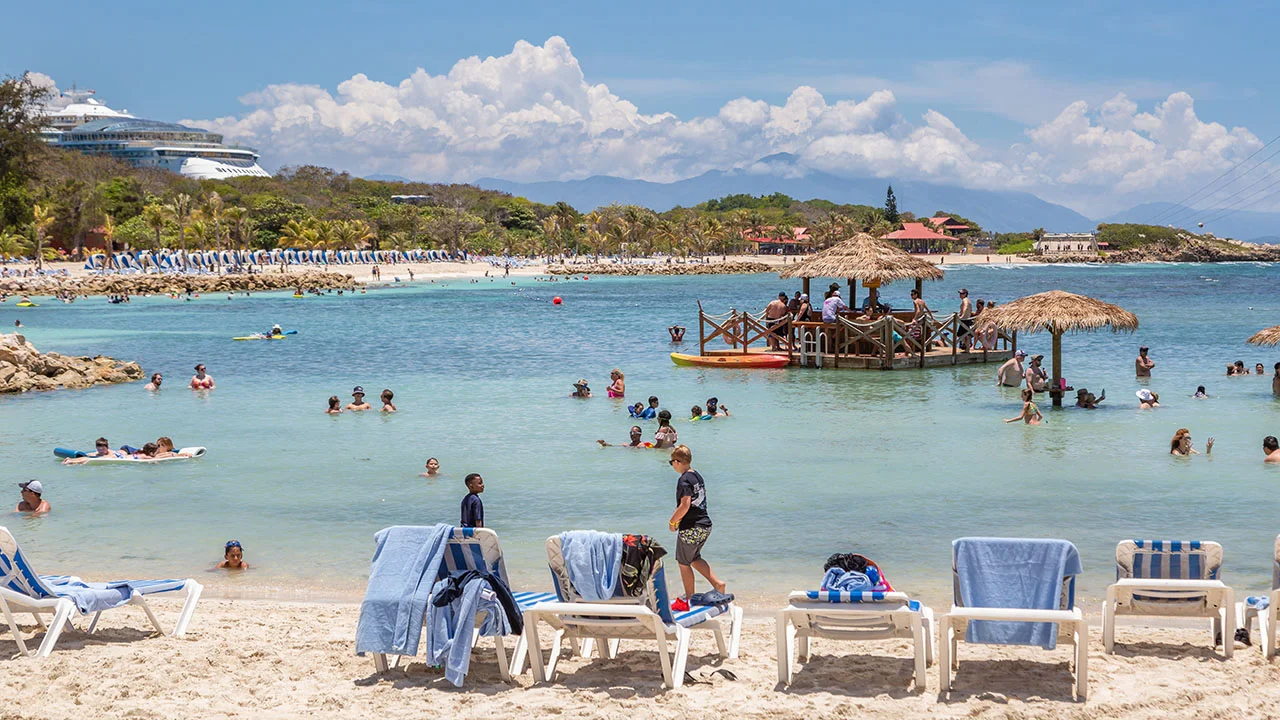
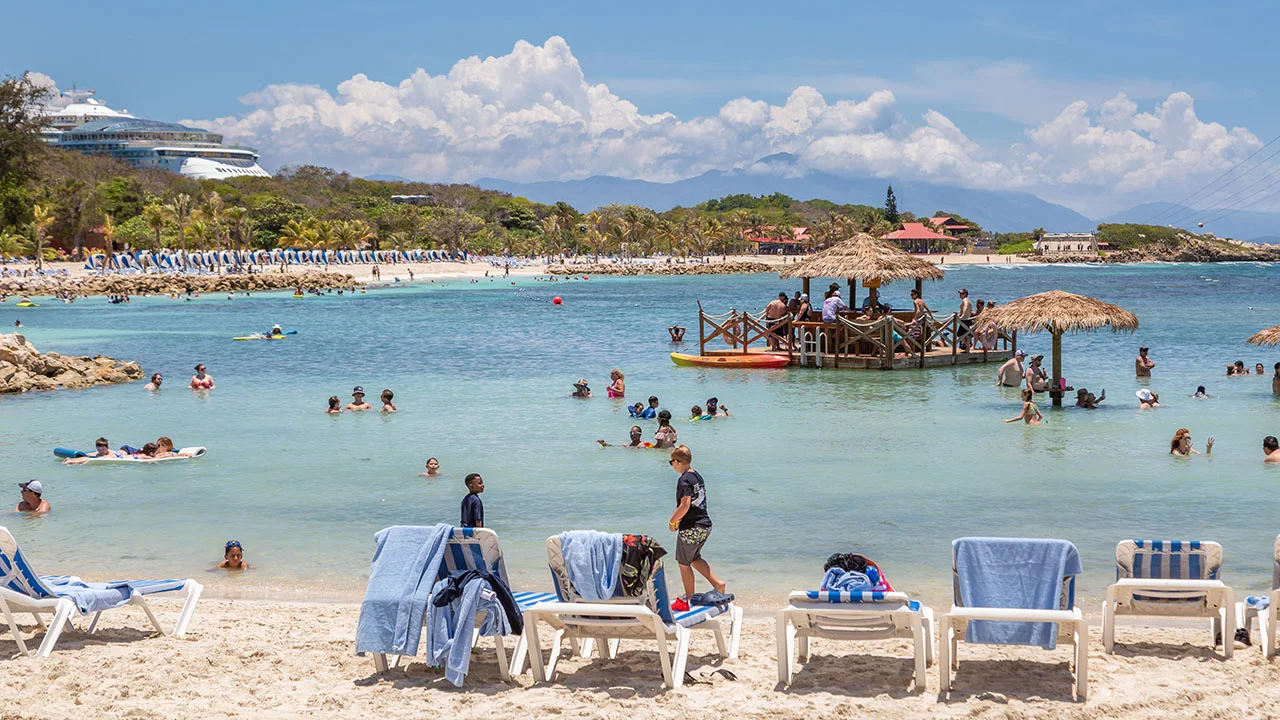
Haïti is blessed with spectacular natural landscapes, including white sand beaches, mountains and rich biodiversity.

Heritage

Heritage

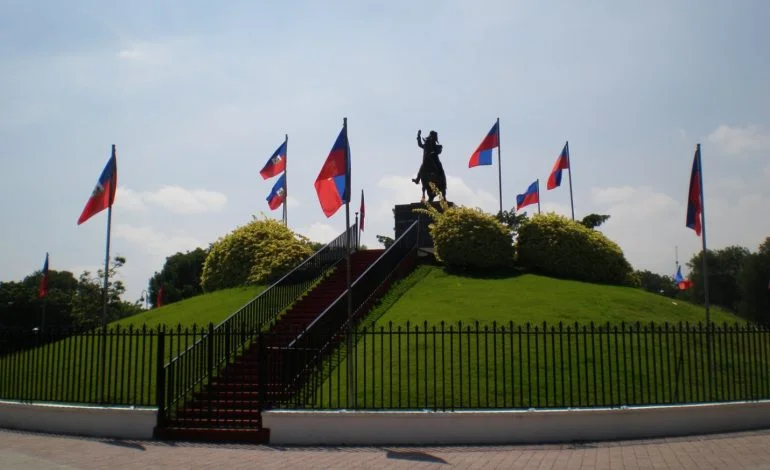
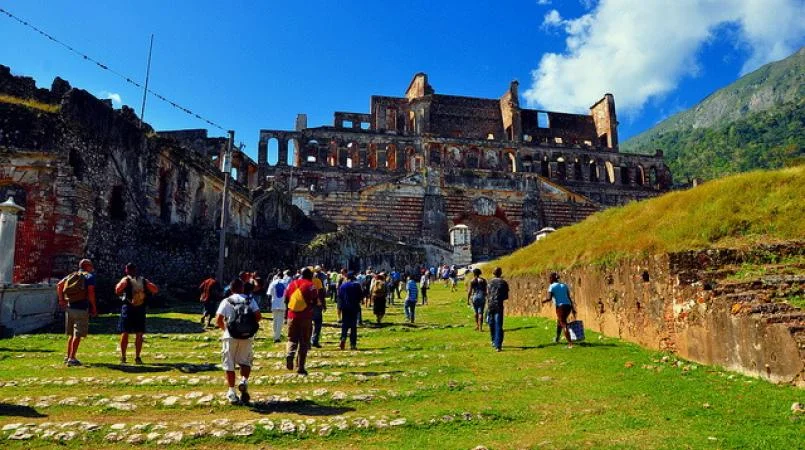
Haïti has a rich historical heritage, including sites like the Citadelle Laferrière and the Sans-Souci Palace, listed as UNESCO World Heritage Sites.

Culture

Culture

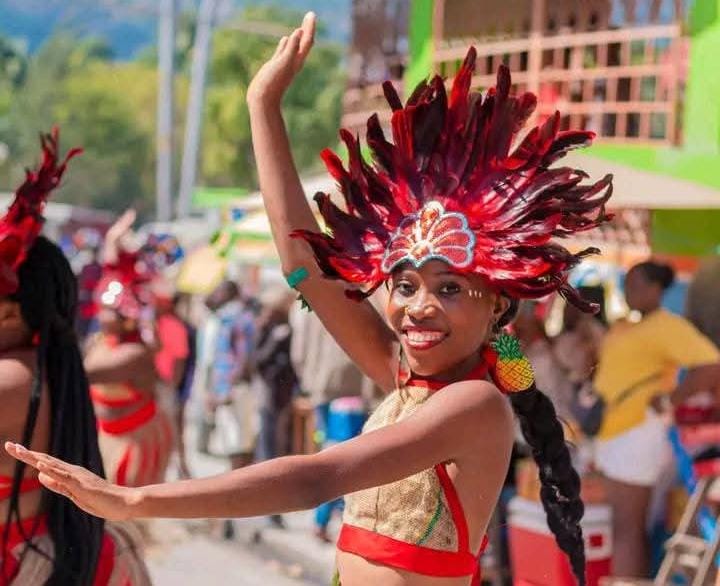
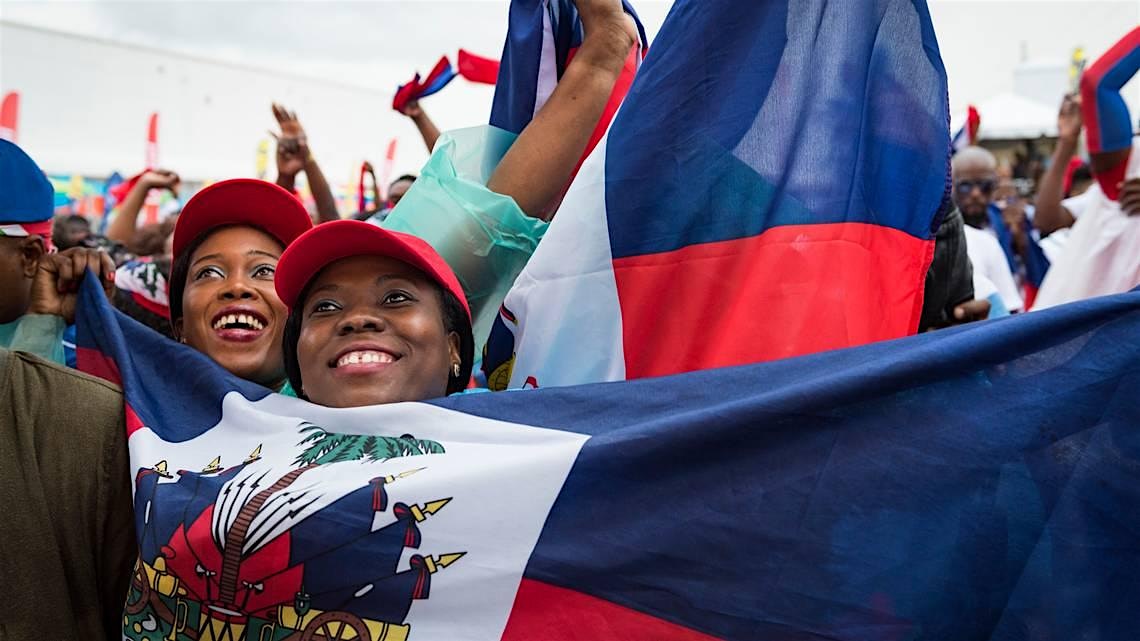
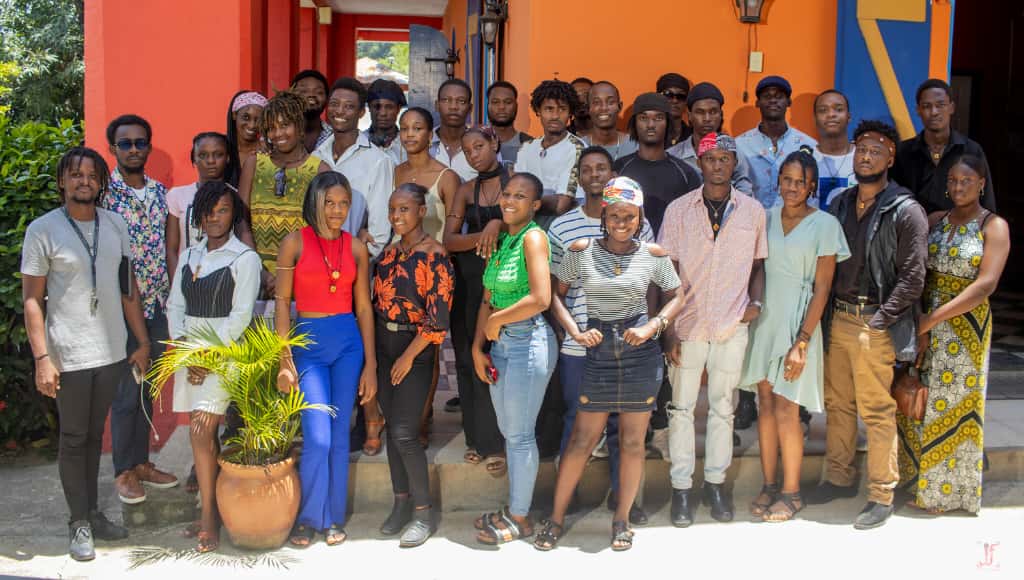
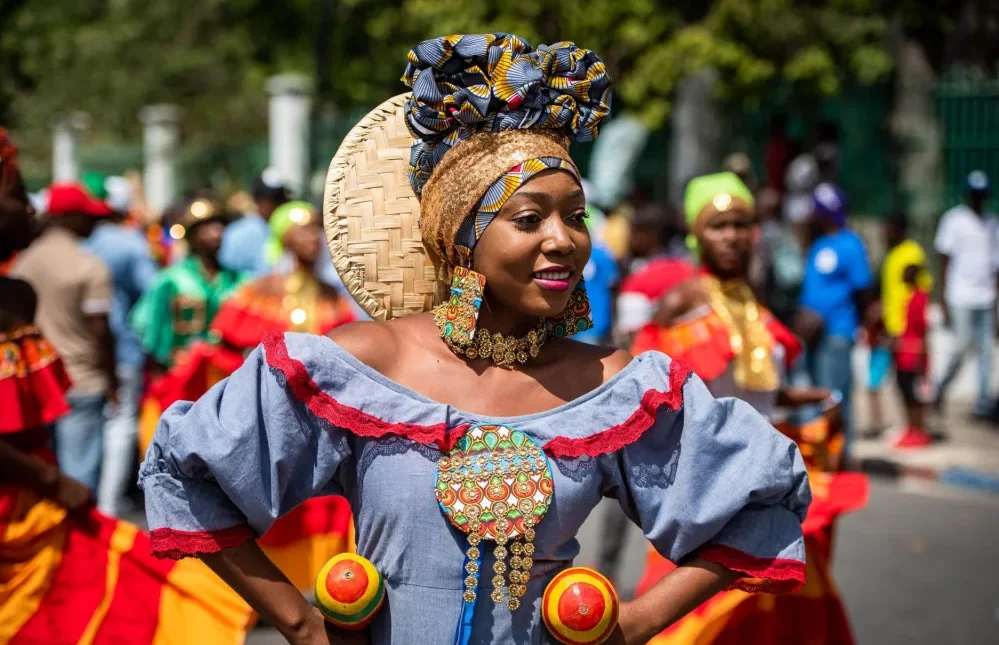
Haïti has a rich and diverse culture, influenced by African, European and indigenous elements. Haitian music, dance, art and cuisine are celebrated around the world.

  • +
    • Post